
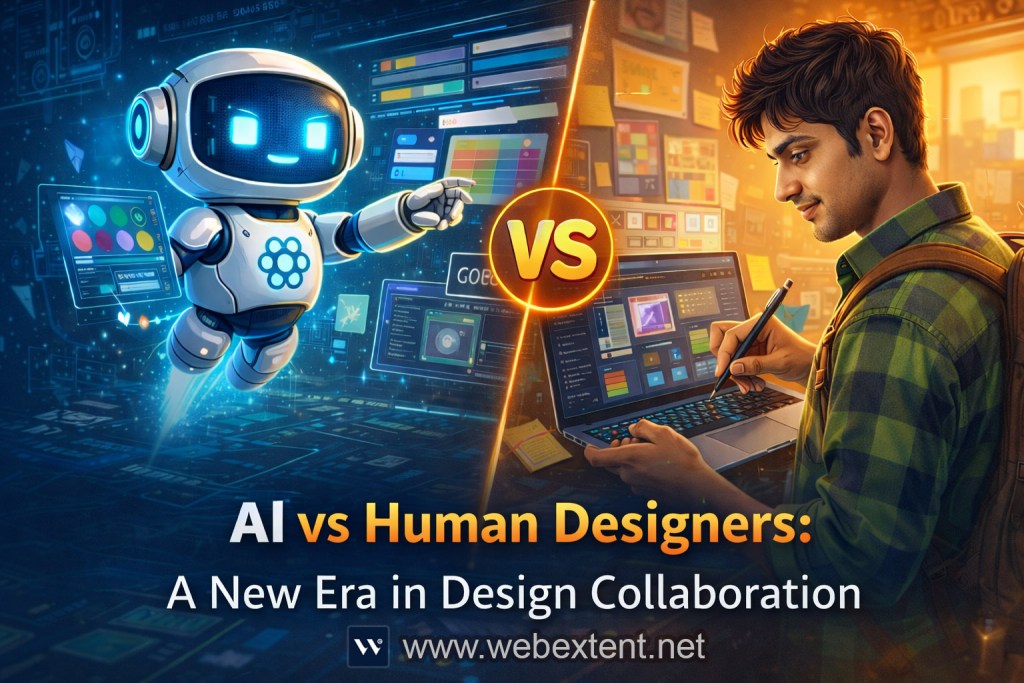
Design is changing fast, and AI design tools are becoming more popular every day. Consequently, this has started a big conversation: can AI actually replace human designers, or is it just a tool to help them work better and faster?
In this article, we’ll look at the key differences between AI design tools and human designers. Specifically, we’ll explore what each one does well, where they fall short, and what this could mean for the future of the design industry.
Understanding AI Design Tools
Artificial Intelligence (AI) design tools are software programs that leverage algorithms to create visual content. These tools are capable of generating logos, layouts, and even entire website designs with minimal input. For instance, popular platforms like Adobe Sensei, Canva’s Magic Design, and Autodesk’s Dreamcatcher provide automated services that emphasize efficiency.
Key Features of AI Design Tools
- Speed: AI tools process large amounts of data and design elements faster than humans.
- Consistency: They maintain a uniform style across multiple elements without error.
- Scalability: AI can handle large-scale projects efficiently, which is particularly ideal for global rebranding.
The Role of Human Designers
On the other hand, human designers bring creativity, emotion, and a personal touch that AI cannot replicate.They interpret client needs, understand cultural nuances, and provide bespoke solutions that resonate on a human level.
Unique Strengths of Human Designers
- Creativity: Human designers can think outside the box and come up with unique concepts.
- Emotional Intelligence: Designers can gauge emotional responses and tailor designs to evoke specific feelings.
- Ethical Considerations: Humans make moral decisions about design impact, whereas AI may overlook them.
Collaborative Dynamics Between AI Tools and Human Designers
Rather than viewing AI tools and human designers as competitors, it’s more productive to see them as collaborators. AI can handle repetitive tasks and data analysis, allowing human designers to focus on more creative and strategic aspects of projects.
Examples of Successful Collaboration
- Automated Tasks: AI handles basic layouts, while designers fine-tune and personalize these elements.
- Data-Driven Design: AI analyzes engagement data to guide human strategy.
- Enhanced Creativity: AI-generated options inspire designers to explore new creative directions.
Limitations and Challenges
While AI design tools offer numerous advantages, they also have limitations that need addressing.
Limitations of AI Design Tools
- Lack of Emotional Depth: AI cannot fully understand or implement the emotional depth that human designers can.
- Over-Reliance on Data: AI tools may rely too heavily on existing data, potentially stifling innovation.
- Ethical Concerns: AI may inadvertently perpetuate biases present in their training data.
Challenges for Human Designers
- Adapting to New Technologies: Designers must continuously learn and adapt to integrate AI tools effectively.
- Job Security Concerns: There is fear among designers that AI could replace their roles.
The Future of Design: AI and Human Collaboration

The future of design is all about the perfect partnership between AI design tools and human creativity.. This collaboration can lead to more innovative, efficient, and personalized design solutions that neither could achieve alone.
Ultimately, the future of design is about the partnership between AI and human creativity. As a result of this synergy, we can expect more innovative and personalized solutions than either could achieve alone.
Predictions and Trends
- Increased AI Integration: AI will become more integrated into everyday design tasks, enhancing productivity.
- Focus on Human-Centric Design: Designers will shift toward empathy-based tasks.
- Ethical AI Development: There will be a greater emphasis on developing ethical AI tools that complement human creativity without replacing it.
AI design tools and human designers each have unique strengths that, when combined, can revolutionize the design industry. By leveraging AI for efficiency and scalability, and humans for creativity and emotional intelligence, the future of design is not only bright but also more inclusive and innovative. As we move forward, the key will be to balance these forces to harness the best of both worlds in creating compelling, effective designs.
Where do you stand? Is AI a helpful assistant or a threat to creativity? Let us know in the comments below!
Looking for a design that balances data-driven precision with human heart? Contact us today to start your project.



Leave a Reply