

You built the website. You wrote the pages. You even added a blog. And yet — your competitor, whose site looks like it was built in 2015, still outranks you every single time. Frustrating? Absolutely. Random? Not really. Understanding why Google prefers brands is the key to unlocking what’s actually holding your rankings back.
This isn’t about Google playing favorites with giant corporations. It’s about a fundamental shift in how search engines evaluate websites. Google no longer just reads your keywords. It reads your reputation.
And the businesses that understand this shift — and build for it — are the ones quietly climbing to the top while everyone else keeps chasing algorithm updates.
Let’s break down exactly what’s happening, and more importantly, what you can do about it.
Does Google Really Prefer Brands?
Short answer: yes. But not in the way you might think.
Google doesn’t have a list of ‘approved brands’ it rewards with better rankings. What it does have is a sophisticated system for measuring trust, authority, and credibility — and well-established brands naturally accumulate these signals over time.
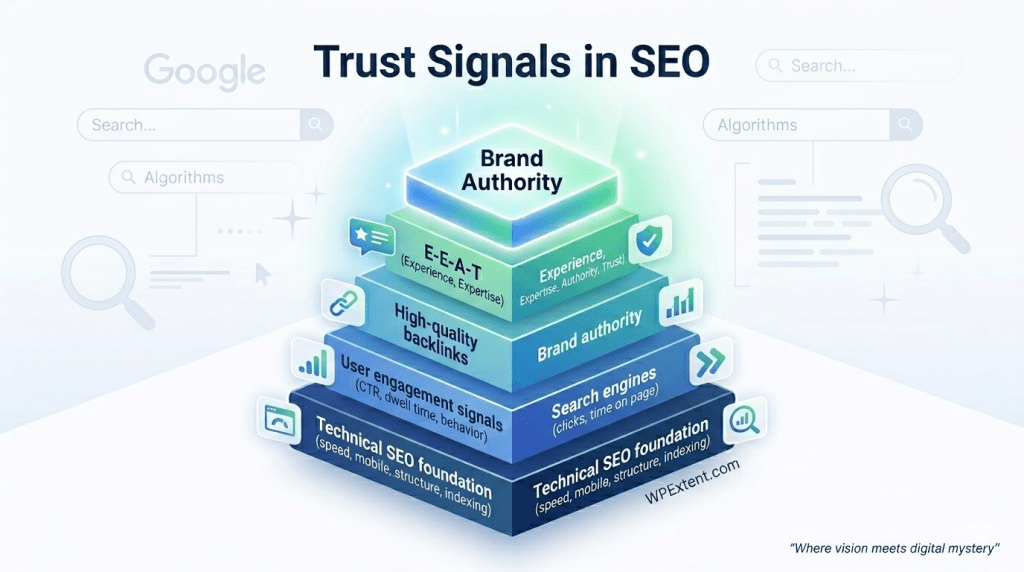
Google’s own Quality Rater Guidelines reference E-E-A-T — Experience, Expertise, Authoritativeness, and Trustworthiness — as core criteria for evaluating content quality. Brands that have been around, earned links, generated reviews, and built a consistent online presence tick these boxes naturally.
That’s why Google trusts brands more. Not because of size. Because of signals.
Why Google Prefers Brands Over Random Websites
So what exactly are these signals? Here’s what’s really happening under the hood — and why brands rank higher in Google searches, consistently.
Brands Create Instant Trust
When someone lands on a website they recognize, they stay. When they land on an unfamiliar site with vague messaging and stock photos, they leave — fast.
Google tracks this behavior. High bounce rates signal that your page didn’t deliver what users expected. Low dwell time tells Google your content isn’t satisfying search intent. Brands with strong recognition naturally earn better engagement metrics, and Google rewards that with better placements.
Trust isn’t just a feeling. In SEO terms, it’s a measurable pattern of user behavior that signals quality to search algorithms.
Brands Earn Backlinks Naturally
One of Google’s most powerful ranking signals is still backlinks — links from other websites pointing to yours. And brands earn them passively.
When a journalist writes about an industry trend, they link to recognizable businesses. When a blogger recommends a product, they link to trusted brands. When someone shares helpful content, they link to sources they trust.
A random, unbranded website has to fight for every single link. A recognized brand attracts them organically. That gap in link authority compounds over time, and it shows up clearly in search rankings.
Brands Receive Branded Searches — And Google Notices
Here’s something many business owners don’t realize: when people search for your business name directly, Google interprets that as a trust signal.
Branded search volume — people typing ‘[Your Business Name] + service’ or simply ‘[Your Business Name]’ into Google — tells the algorithm that real demand exists for your brand. It’s a signal that you’re not just another faceless website. You’re a business people seek out deliberately.
This is why brand recognition in SEO is so powerful. The more people search for you by name, the more Google sees you as an authority worth ranking.
Brands Often Deliver a Better User Experience
Established brands typically invest in their websites. Faster load times. Mobile-friendly design. Clear navigation. Intuitive conversion paths. These aren’t cosmetic niceties — they’re ranking factors.
Google’s Core Web Vitals update made this official: user experience directly impacts search performance. A website that loads slowly, looks broken on mobile, or confuses visitors will struggle to rank, regardless of its content quality.
Brands understand this investment. Many smaller business websites don’t — yet.
Trust Signals Matter More Than Company Size
Here’s the good news: Google ranks trusted websites, not just large ones. The signals that make a brand powerful in search — backlinks, engagement, consistent presence, expert content — are all achievable by small businesses. You don’t need a multimillion-dollar marketing budget. You need a clear strategy and consistent execution.
Size is a shortcut to trust. But it’s not the only path.
Why Great Small Business Websites Still Struggle to Rank
Here’s a hard truth: having a website is not the same as having a brand. And having a brand is not the same as having an authoritative online presence. Many small business websites fall into traps that quietly kill their SEO potential.
Do any of these sound familiar?
- Weak, generic messaging that could describe any competitor in your industry
- Design that looks professional enough but doesn’t communicate credibility
- No visible proof — no testimonials, case studies, or real results
- No clear authority — who are you, why should anyone trust you?
- Slow page load speeds that frustrate both users and search crawlers
- No brand clarity — visitors can’t quickly understand what you do or who you serve
These aren’t just UX problems. They’re SEO problems. Because every time a visitor bounces, every time a potential customer clicks away in confusion, Google is watching. And it adjusts its rankings accordingly.
The businesses that rank well aren’t always the best at what they do. They’re the ones that communicate their value most clearly and build the most credible online presence.
Can Small Businesses Beat Bigger Brands on Google?
Yes. And it happens more than you’d think.
Big brands dominate broad, high-competition searches. But they are remarkably vulnerable in three areas that small businesses can exploit directly:
- Local and geographic searches — ‘best accountant in [city]’ is winnable
- Niche long-tail keywords — specific questions and searches where large brands haven’t bothered to create focused content
- Authentic community trust — real reviews, local presence, and personal brand that a corporate entity simply cannot replicate
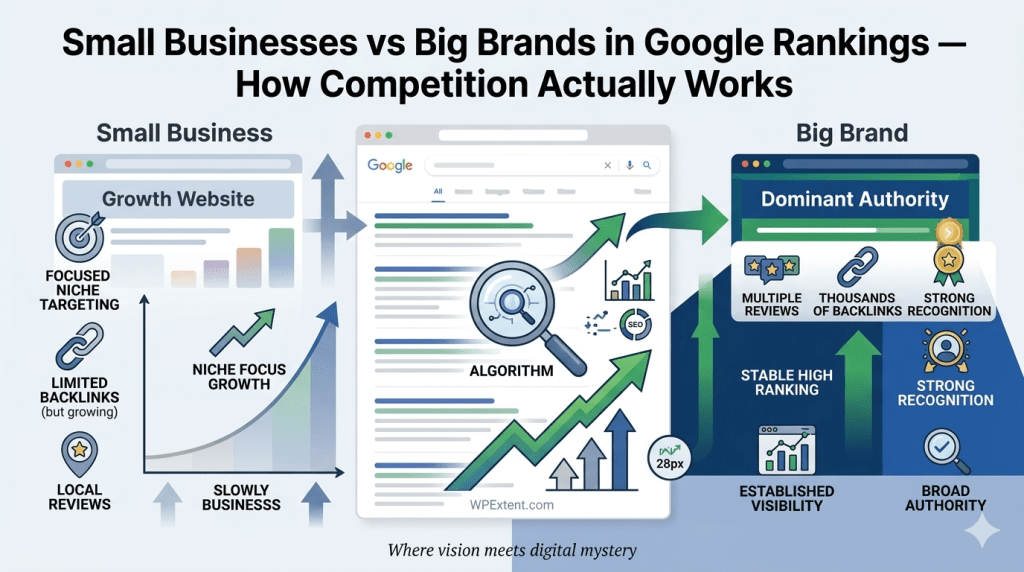
The businesses that figure out how to compete aren’t trying to out-spend larger brands. They’re out-positioning them. They’re building a more targeted, more credible, more trustworthy presence in a specific niche or geography.
That’s exactly what small business brand SEO is about.
7 Smart Ways Small Businesses Can Compete on Brand Authority
None of these are quick fixes. All of them compound over time and create a more defensible, trustworthy digital presence. Start with one or two, then build from there.
1. Build a Clear Brand Identity Before Anything Else
Your brand identity isn’t your logo. It’s the answer to: who are you, who do you serve, what makes you different, and why should someone trust you over the alternative?
Before focusing on keywords or backlinks, get that clarity on paper. It should shape every piece of content you publish, every page you build, and every social profile you maintain.
2. Improve Website Trust Within the First 5 Seconds
Visitors make trust decisions almost instantly. A professional, clear, fast-loading homepage communicates credibility before a single word is read. Evaluate your homepage ruthlessly: Does it clearly state who you are? Does it look trustworthy? Does it load fast? Does it work perfectly on mobile?
If you answered ‘not sure’ to any of those, that’s where your SEO problem starts.
3. Publish Expert Content Regularly
Content is how small businesses demonstrate expertise and build topical authority. When you consistently publish helpful, accurate, specific content in your niche, Google begins to associate your domain with that subject matter.
This is topical authority — and it’s one of the most powerful SEO levers available to small businesses. A focused blog that answers the real questions your customers are asking will, over time, outperform a competitor who publishes nothing.
4. Add Testimonials, Reviews, and Real Proof
Social proof is an online trust signal that works on two levels: it convinces human visitors, and it signals credibility to Google.
Add genuine testimonials on your homepage and service pages. Actively collect Google reviews. Feature case studies if you have them. Show the logos of clients you’ve worked with. Make it impossible for a visitor to doubt your track record.
5. Stay Consistent Everywhere Online
Brand authority signals come from across the web — not just your website. Your Google Business Profile, social media profiles, industry directories, and review platforms all feed into Google’s understanding of who you are.
Inconsistent business names, phone numbers, or addresses across platforms create confusion for both users and search crawlers. Consistency, on the other hand, reinforces authority.
6. Improve Speed and Mobile User Experience
A slow website is an invisible website. Google deprioritizes pages that load poorly — and users abandon them within seconds. Run a speed audit on your site (a website audit can reveal issues you didn’t know existed) and address the biggest problems first.
Mobile experience is non-negotiable. More than half of all searches happen on mobile devices. If your site doesn’t work beautifully on a phone, you’re already losing.
7. Become Searchable by Your Brand Name
Actively work to grow branded search volume. This means building a real presence in your community — online and offline. Engage on platforms where your customers spend time. Be consistent and visible so that people think of your name when they need what you offer.
When they search for you by name, Google notices. And it ranks you accordingly.
How WPExtent Helps Businesses Build Real Trust Online
Most web agencies build websites. WPExtent builds credibility.
The difference matters more than most business owners realize. A website that looks professional is one thing. A website that communicates authority, loads fast, builds confidence in visitors, and sends the right trust signals to Google — that’s a growth asset.
WPExtent helps small businesses turn their websites into trust-building growth assets by focusing on the elements that actually move the needle: clear brand messaging, credibility-first design, SEO-ready structure, and long-term website health.
Every project starts with a simple question: does this website make a visitor trust you within five seconds? If the answer is no, the strategy begins there.
Whether you’re starting from scratch, considering a redesign, or trying to improve your current rankings, WPExtent focuses on credibility before conversion — because trust is what makes conversion possible.
If your website currently isn’t generating the leads or rankings it should, it’s worth exploring what’s actually holding it back. A professional website audit can surface the exact issues standing between you and better results.
SEO in 2026 Is Becoming Brand SEO
The SEO landscape has changed dramatically — and it’s still changing. Keywords still matter. But they’re the starting point, not the destination.
Google’s algorithm has become remarkably good at evaluating intent, authority, and real-world reputation. It reads your backlink profile as a measure of how much the web trusts you. It reads user engagement as a signal of how well you serve your audience. It reads your E-E-A-T signals as an indicator of whether your content deserves to be recommended.
Put simply: SEO reputation is now as important as SEO technique. The businesses that win long-term are the ones that build both simultaneously.
This isn’t a reason to feel overwhelmed. It’s a reason to feel optimistic — because genuine trust and authority are things every small business can build, with the right strategy and the right partner.
The window for getting ahead of this shift is still open. The businesses acting now are the ones who will be nearly impossible to dislodge in two or three years.
Frequently Asked Questions
Still have questions? Here are the answers to what small business owners most commonly ask about brand authority and Google rankings.
Does Google rank brands higher, and why does Google prefer brands?
Yes — one major reason why Google prefers brands is that they consistently generate stronger trust signals such as branded searches, backlinks, user engagement, and online mentions. However, this does not mean only big brands can rank higher. Small businesses can also compete effectively by building credibility, publishing expert content, and strengthening their online presence over time.
Can small businesses outrank big brands?
Absolutely. Big brands usually dominate broad and highly competitive keywords, but small businesses can outperform them in local searches, niche topics, and long-tail queries. Google prioritizes relevance, intent satisfaction, and trust — not just company size. A focused small business with strong SEO strategy and clear positioning can often outrank larger brands in specific areas.
What are trust signals in SEO?
Trust signals are the indicators Google uses to evaluate whether a website deserves higher rankings. These include high-quality backlinks from trusted sources, positive user engagement (such as longer time on site and lower bounce rates), consistent business information (NAP), customer reviews, HTTPS security, clear authorship, and a fast, well-structured website experience.
How does branding help SEO rankings?
Branding strengthens SEO by increasing recognition and trust. When users search for your business by name, Google interprets it as a strong authority signal. Additionally, strong branding naturally attracts backlinks, improves engagement rates, and increases overall visibility. Over time, this builds a powerful cycle that improves rankings and search stability.
Can redesigning a website improve trust and rankings?
Yes — significantly. A poorly designed website reduces credibility and increases bounce rates, which negatively impacts SEO performance. A well-executed redesign improves speed, clarity, mobile experience, and user flow. These improvements strengthen trust signals, enhance engagement, and can lead to better search rankings over time.
Is SEO now more than just keywords?
Yes, modern SEO goes far beyond keywords. While keywords still help with discovery, Google now evaluates authority, trust, user experience, and brand reputation. It looks at how users interact with your website, how often your brand is searched, and how credible your content appears. Keywords bring traffic, but trust and authority determine long-term rankings.
Conclusion: Your Website Should Work as Hard as You Do
Here’s the honest reality: Google isn’t ignoring your business because it doesn’t care. It’s ignoring your website because it doesn’t yet have enough reason to trust it.
That’s fixable. Trust is buildable. Authority is earned through consistent, intentional effort — through better content, a stronger brand presence, faster page speeds, clearer messaging, and real proof of what you deliver.
The businesses that feel invisible online today can absolutely become the ones Google recommends tomorrow. But it starts with taking website credibility seriously — not as a design project, but as a business growth strategy.
WPExtent builds websites that earn confidence from both Google and the customers who find you there. If your current website isn’t doing that, it might be time to talk.
Your competitors aren’t stopping. The algorithm isn’t slowing down. And the gap between trusted brands and everyone else keeps widening.
Start building yours.
Follow WPExtent for More Insights
Get practical WooCommerce tips, conversion strategies, and real-world insights to grow your online business.
We Are Available On:
Instagram:
https://www.instagram.com/thewpextent
Twitter (X):
https://x.com/TheWPExtent
Reddit:
https://www.reddit.com/user/WPExtent/



Leave a Reply