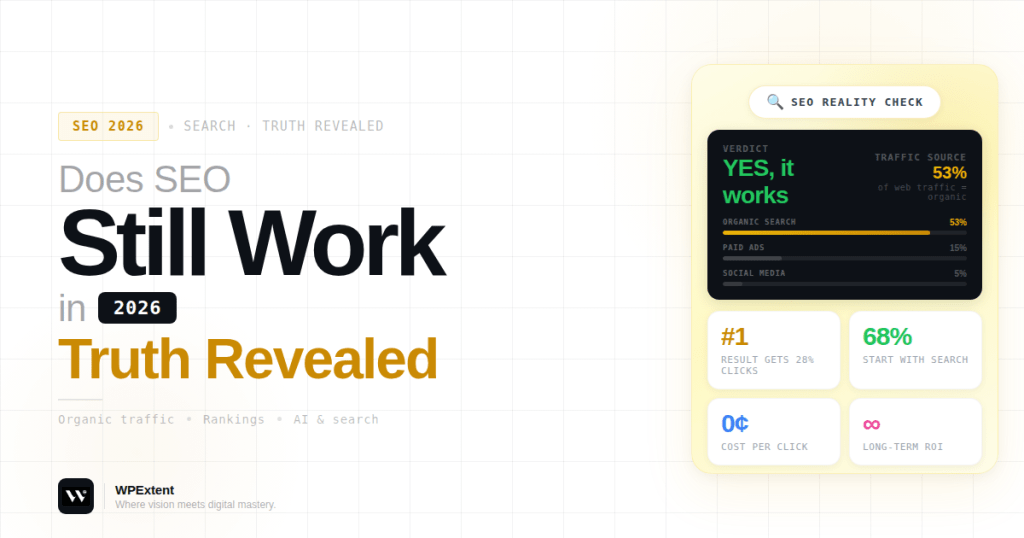
With the rapid rise of AI tools, social media platforms, and paid advertising, many people are asking an important question: Does SEO still work in 2026?
Some believe SEO is dying. Others think it’s becoming more important than ever.
The truth is simple—SEO is not dead. It has evolved.
Search engine optimization is still one of the most powerful ways to generate consistent, high-quality traffic. However, the strategies that worked years ago are no longer enough. In 2026, SEO is smarter, more competitive, and more focused on user experience than ever before.
In this article, we’ll explore whether SEO still works, what has changed, and how you can use modern SEO strategies to grow your business.
The Short Answer: Yes, SEO Still Works
Let’s be clear—SEO is still highly effective in 2026.
Businesses that invest in SEO continue to:
- Rank on search engines
- Generate organic traffic
- Build long-term brand authority
- Get high-quality leads
In fact, SEO is often more valuable than paid ads because it provides long-term results without continuous spending.
However, success now depends on strategy, quality, and consistency.
What Has Changed in SEO?
SEO in 2026 is very different from what it was a few years ago.
Search engines have become more advanced, focusing heavily on user intent, content quality, and experience.
Here are the biggest changes:
1. AI-Powered Search Results
Search engines now use advanced AI to understand:
- Search intent
- Context
- User behavior
This means keyword stuffing no longer works. Content must be relevant, helpful, and user-focused.
2. Content Quality Matters More Than Ever
Low-quality or thin content doesn’t rank anymore.
To succeed, your content must:
- Provide real value
- Answer user questions
- Be well-structured and readable
- Show expertise and authority
3. User Experience Is a Ranking Factor
Google prioritizes websites that offer a great experience.
Important factors include:
- Fast loading speed
- Mobile responsiveness
- Easy navigation
- Clean design
4. Search Intent Over Keywords
SEO is no longer just about keywords—it’s about intent.
You need to understand:
- What users are searching for
- Why they are searching
- What solution they expect
Content that matches intent performs better.
5. Rise of Voice and Visual Search
More users now search using:
- Voice assistants
- Images
- Smart devices
This changes how content should be structured and optimized.
Why SEO Still Works in 2026
Despite all these changes, SEO remains one of the most powerful marketing strategies.
Here’s why:
Long-Term Traffic Source
Unlike ads, SEO continues to bring traffic over time.
Once your content ranks, it can generate visitors for months or even years.
High-Intent Visitors
SEO targets people who are actively searching for solutions.
This means:
- Better engagement
- Higher conversion rates
- More qualified leads
Cost-Effective Marketing
While SEO requires time and effort, it is more cost-effective in the long run compared to paid advertising.
Builds Trust and Authority
Websites that rank higher are often seen as more credible.
Good SEO helps establish your brand as an authority in your industry.
Common SEO Myths in 2026
Let’s clear up some common misconceptions.
“SEO Is Dead”
This is false. SEO is evolving, not dying.
“AI Will Replace SEO”
AI is actually enhancing SEO, not replacing it. It helps improve content, research, and strategy.
“Only Big Companies Can Rank”
Small businesses can still compete with the right strategy and quality content.
“SEO Is Just About Keywords”
Modern SEO focuses on user experience, intent, and content value, not just keywords.
Key SEO Strategies That Work Today
To succeed in 2026, you need to adapt to modern SEO practices.
1. Create High-Quality Content
Focus on content that:
- Solves real problems
- Answers specific questions
- Provides actionable insights
2. Optimize for User Experience
Make sure your website is:
- Fast
- Mobile-friendly
- Easy to navigate
3. Use Smart Keyword Strategy
Instead of stuffing keywords:
- Use natural language
- Focus on long-tail keywords
- Match search intent
4. Build Strong Internal Linking
Use anchor phrases like:
- Learn more about our SEO services
- Explore our website solutions
- Discover our digital marketing strategies
This helps improve navigation and SEO structure.
5. Focus on Technical SEO
Ensure your website has:
- Clean URLs
- Proper indexing
- Secure HTTPS
- Optimized structure
6. Consistency Is Key
SEO is not a one-time task.
You need to:
- Publish regularly
- Update content
- Monitor performance
- Improve continuously
The Role of a Digital Agency in SEO Success
SEO has become more complex in 2026.
It requires expertise in:
- Content strategy
- Technical optimization
- Analytics
- User experience
This is why many businesses choose to work with professional agencies.
An all-in-one agency like WebExtent provides:
- SEO optimization
- Lead generation
- Website development
- Graphic design
- Logo design
- Full digital marketing services
You can explore their services here: https://wpextent.com/
Working with experts ensures your SEO strategy is effective, scalable, and results-driven.
SEO vs Paid Ads: Which Is Better?
Both SEO and paid ads have their place.
SEO
- Long-term results
- Cost-effective
- Builds authority
Paid Ads
- Instant traffic
- Short-term results
- Requires ongoing budget
The best approach is to combine both for maximum impact.
The Future of SEO
SEO will continue to evolve, but it’s not going anywhere.
Future trends include:
- More AI-driven search
- Greater focus on user intent
- Increased importance of content quality
- Integration with new technologies
Businesses that adapt will continue to succeed.
Conclusion
So, does SEO still work in 2026?
Absolutely.
But it’s no longer about shortcuts or outdated tactics. Success in SEO now depends on:
- High-quality content
- Strong user experience
- Smart strategy
- Consistent effort
SEO remains one of the most powerful tools for building long-term online success.
If you invest in the right approach—or work with a professional agency like WebExtent—you can turn SEO into a major growth engine for your business.


Leave a Reply